IATA-Certified Pet Crates for Flying
What is a IATA Certified Pet Crate?
If you are planning a flight with your pet, the term “IATA-compliant” will quickly come up. IATA (International Air Transport Association) sets global guidelines for how animals should be transported by air.
An IATA-certified pet crate is not a specific brand, but a crate that meets strict construction requirements defined in the Live Animals Regulations (LAR).
These rules exist for one reason: to ensure your pet remains safe, secure, and comfortable during the flight. Most airlines will refuse your pet at check-in if the crate does not meet these standards.
Essential Crate Features for Airline Approval
Not all plastic crates are equal. Even if a product says “airline approved,” you must verify the physical features yourself.
A proper airline crate must have:
- Rigid shell material
Made of strong plastic. No collapsible or foldable crates. - Metal door and fasteners
The door must be metal with a secure lock. The top and bottom must be connected with metal bolts, not just clips. - Ventilation on multiple sides
At least 3 sides (4 is better for international flights). - Water and food bowls
Must be attachable to the inside of the door and accessible from the outside. - No wheels attached
If the crate has wheels, they must be removed before check-in.
How do I measure my dog for a flight crate?
(Let's focus the example on dogs for now since their larger size can be a bigger issue than cats).
Getting the size right is the most common issue for first-time travelers. If the crate is too small, your dog may be rejected at check-in. If it’s too large, your dog may not be stable during transport.
To measure correctly:
- Length (A): Nose to base of tail
- Width (B): Widest part of the shoulders
- Height (C): Floor to top of head or ears
What airlines expect:
- Crate length = A + extra space
- Crate height = C + clearance above ears
- Dog must be able to stand, turn, and lie down comfortably
Real-world example:
If your dog is:
- 60 cm long
- 45 cm tall
👉 You should look for a crate around:
- 70–75 cm length minimum
- 50–55 cm height minimum
If your dog is close to the limit →
always size up.
Crates that get rejected at the airport
This is where many travelers go wrong. Avoid these completely:
- Metal bar crates (home/training crates)
- Collapsible or foldable crates
- Soft carriers (for cargo travel)
- Crates that are too small
- Crates with wheels still attached
Even if they look strong, they will not be accepted for flights.
Final checklist before flying
Before heading to the airport, confirm:
- Crate is rigid plastic with metal door
- All parts are secured with bolts
- Wheels are removed
- Your dog fits comfortably
- Water bowl is attached
- Bedding is absorbent
- Airline rules are confirmed
Choosing the right dog travel crate is not about finding the most expensive option - it’s about choosing the right type and the right size.
If you follow the guidelines above and select one of the recommended crates, you significantly reduce the risk of:
- Check-in rejection
- Travel stress
- Safety issues during the flight
And that’s what makes the difference between a smooth journey and a costly mistake.

Petmate Sky Kennel – 32”
(Medium Dogs 30–50 lbs)
A heavy-duty airline travel crate designed for dogs flying in the cargo hold. The 32” Sky Kennel is one of the most commonly used crates by airlines and professional pet transport companies.
(The “32-inch” label refers to Petmate’s size category, not the actual length)
📏 Size & fit
- External dimensions: 29.5” L x 19.75” W x 23.5” H (≈ 75 x 50 x 60 cm)
- Recommended for: dogs approx. 30–50 lbs (13–23 kg)
- Internal fit: dogs up to approx.
- Length: 26–27” (66–69 cm)
- Height: 20–21” (51–53 cm)
👉 Typical fit:
- Border Collie
- Cocker Spaniel
- Small Labrador (lean build)
⚠️ Your dog must:
- Stand without ears touching the top
- Turn around easily
- Lie down fully
If your dog is close to these limits → size up.
✔ Why it works for flights
- Rigid polypropylene shell (IATA-style requirement)
- Metal door with secure latch system
- 360° ventilation for airflow
- Tie-down holes for transport security
- Includes 2 bowls, absorbent pad, and travel stickers
- Trusted by airlines and pet transport companies


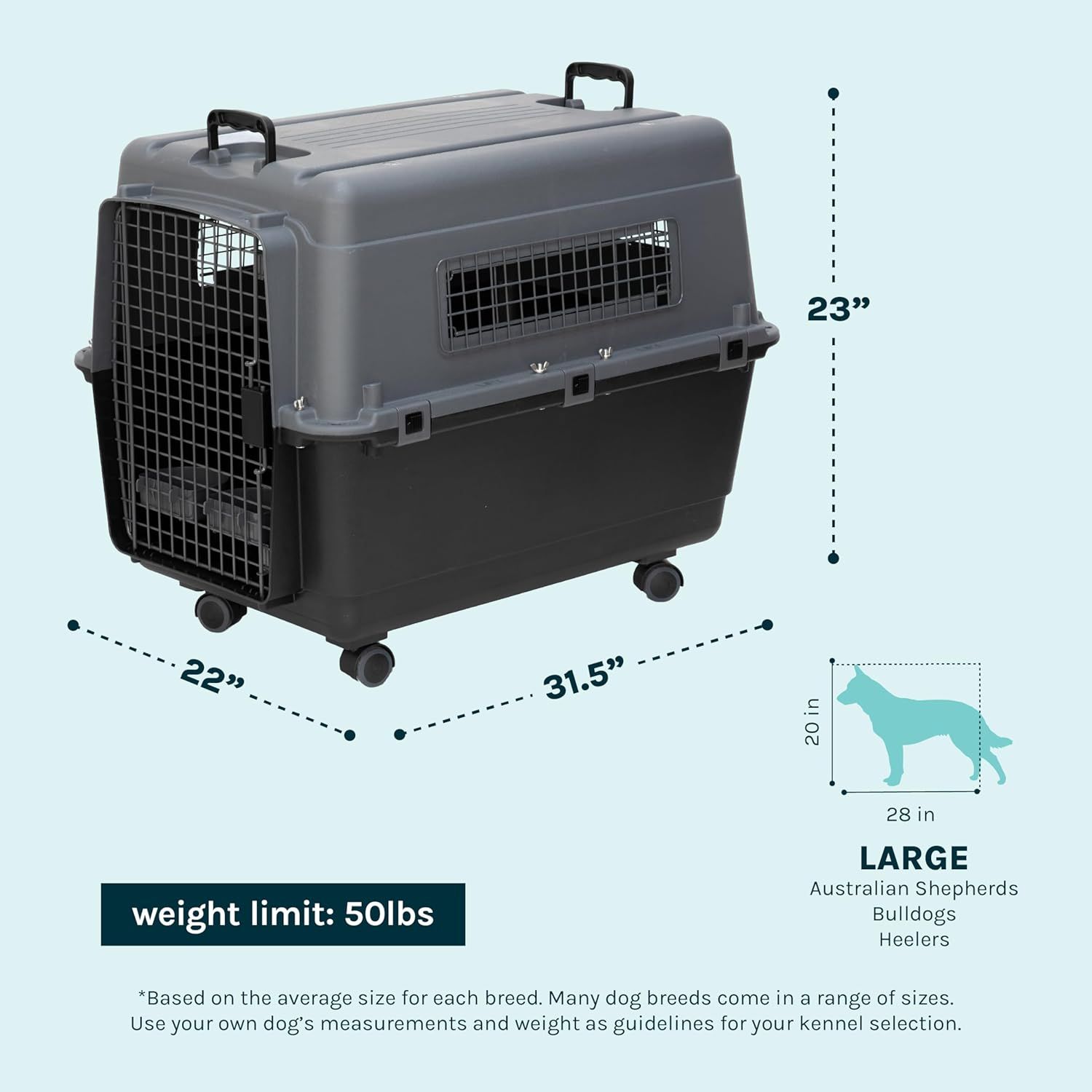
SportPet Airline-Compliant Travel Dog Kennel
(Medium Dogs 30–50 lbs)
A hard-shell airline travel crate designed for dogs flying in the cargo hold. This Large size is suited for medium-sized dogs and includes practical travel extras like bowls, tie-down points, and removable wheels.
📏 Size & fit
- External dimensions: 31.5” L x 22” W x 25.25” H (≈ 80 x 56 x 64 cm)
- Internal fit: dogs up to approx.
- Length: 28” (71 cm)
- Height: 20” (51 cm)
👉 Typical fit:
- Border Collie
- Australian Shepherd
- Small Labrador (lean build)
⚠️ Your dog must:
- Stand without ears touching the top
- Turn around easily
- Lie down fully
If your dog is close to these limits → size up.
✔ Why it works for flights
- Rigid plastic shell (IATA-style requirement)
- Metal door with bolt-secured construction
- Ventilation on multiple sides
- Tie-down holes for secure transport
- Includes 2 bowls + “Live Animal” stickers
- Removable wheels for airport handling


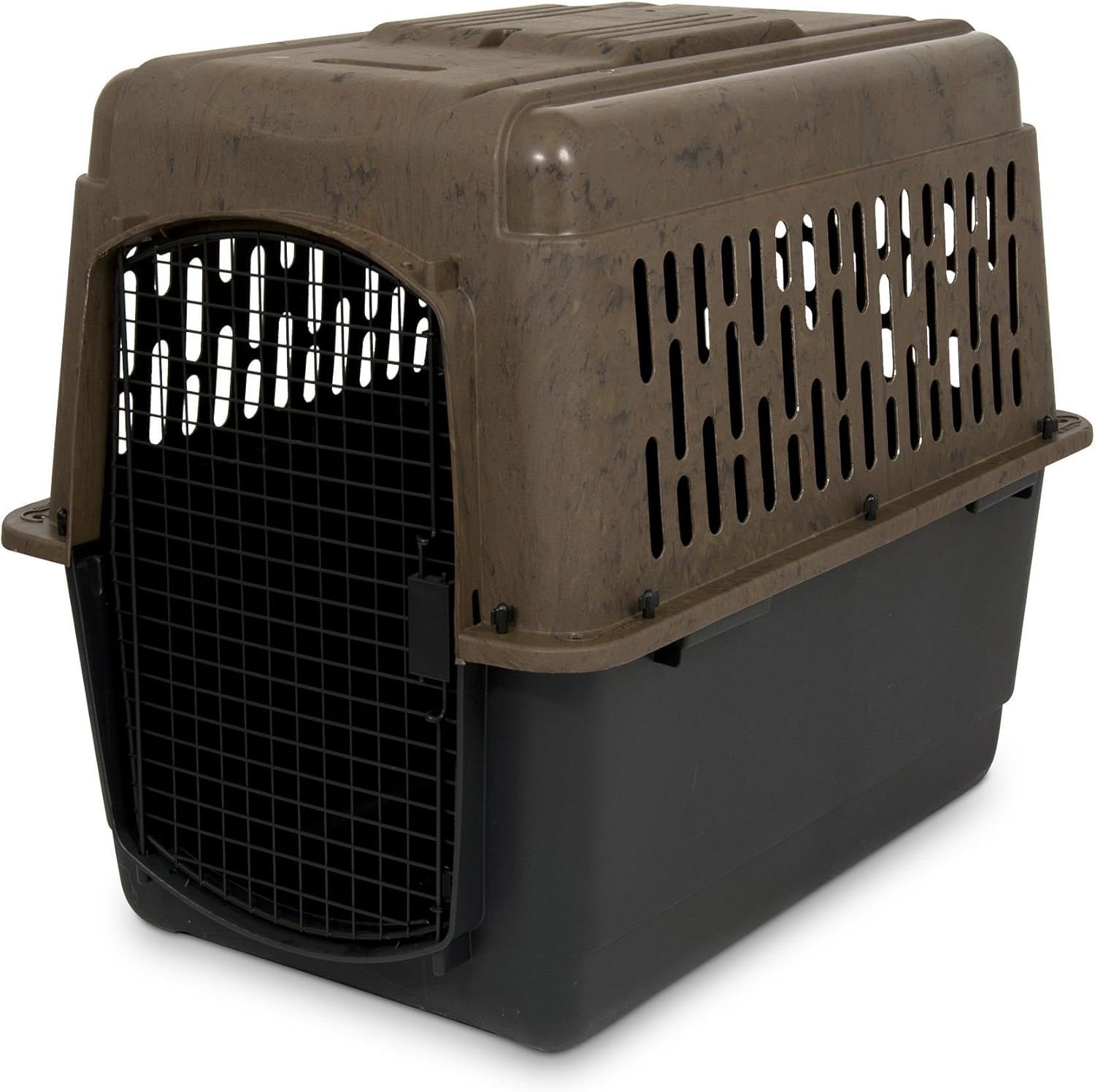
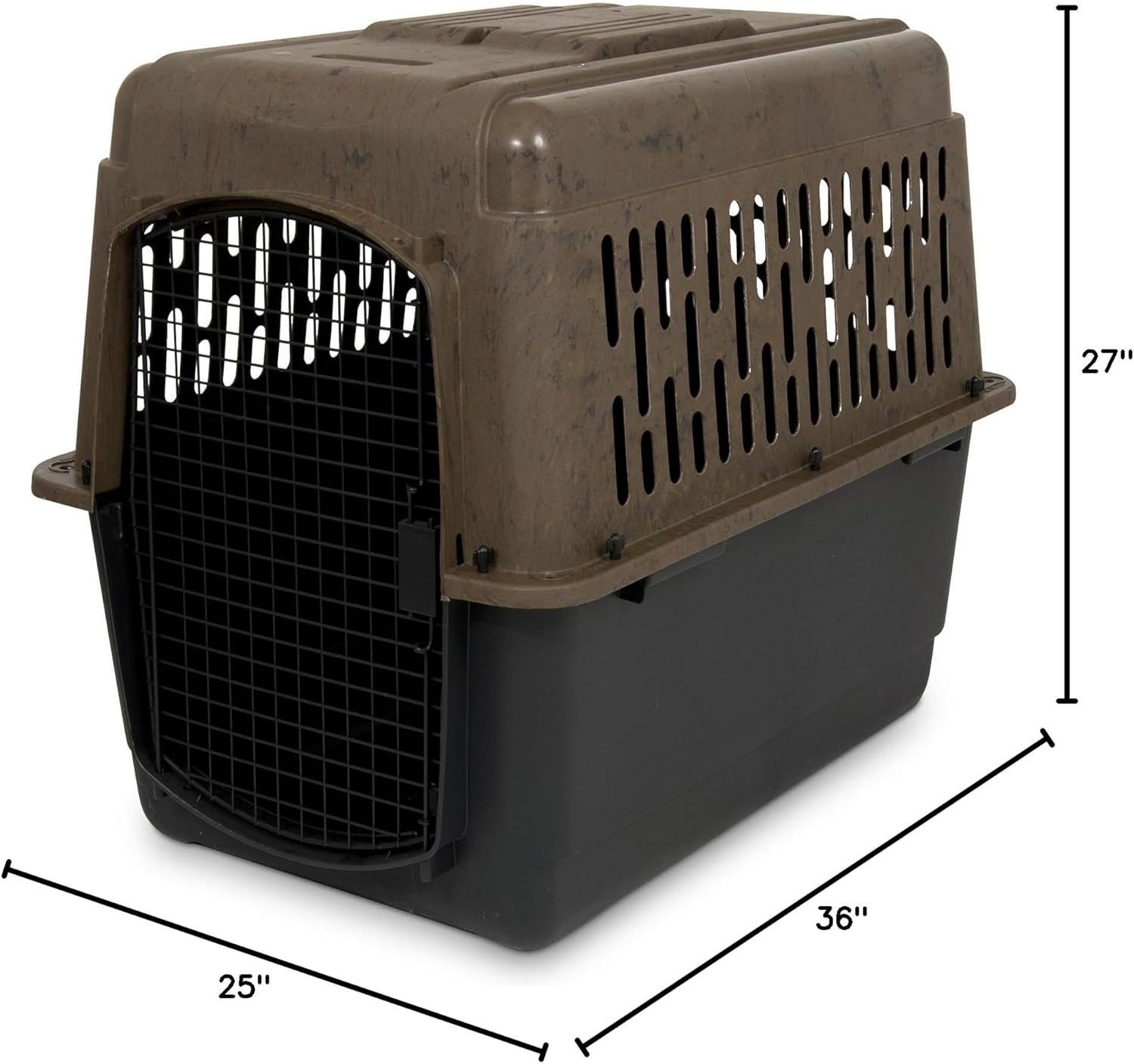
Petmate Ruffmaxx Dog Kennel – 36”
(Large Dogs 50–70 lbs)
A hard-shell travel crate designed for larger dogs, suitable for air and road travel. The 36” Ruffmaxx offers more space than standard medium crates, making it a better fit for true large breeds.
📏 Size & fit
- External dimensions: 36” L x 27” W x 25” H (≈ 91 x 69 x 64 cm)
- Recommended for: dogs approx. 50–70 lbs (23–32 kg)
- Internal fit: dogs up to approx.
- Length: 31–32” (79–81 cm)
- Height: 22–23” (56–58 cm)
👉 Typical fit:
- Labrador Retriever
- Golden Retriever (lean build)
- German Shepherd (smaller females)
⚠️ Your dog must:
- Stand without ears touching the top
- Turn around easily
- Lie down fully
If your dog is close to these limits → size up.
✔ Why it works for travel
- Rigid, heavy-duty plastic shell
- Ventilation on multiple sides
- Bolt-secured assembly (nuts included)
- Lightweight for its size
- Suitable for both air and car travel
⚠️ Before you fly
- Ensure all parts are securely fastened
- Remove wheels → most airlines don’t allow them attached
- Confirm airline-specific crate requirements
- Add additional bedding if needed for longer journeys
Recent Posts